Task
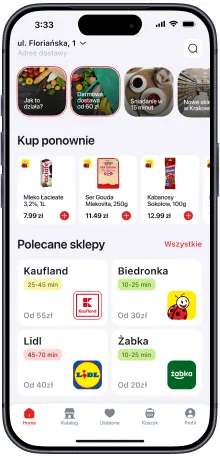
The problem I was solving: it is uncomfortable for the user to shop in several stores at the same time. It costs extra time and extra logistics. Kropka had to bring different stores together in one app and simplify choosing products and placing an order.
Research
picked out the key segments: freelancers, remote employees and office workers.
Persona analysis
wrote down the situations where the service is most relevant (from “I need to buy groceries for dinner quickly” to “a full weekly shop”).
JTBD
looked through Glovo, Uber, Wolt, Bolt, Yandex Eda and Delivery Club. Built functional maps and identified the strong and the weak sides.
Competitor analysis
ran 4 interviews, collected insights about the needs and the pains of users.
In-depth interviews
Concept and ideas
Based on the analysis I picked the priority features:
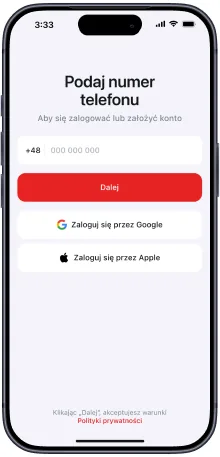
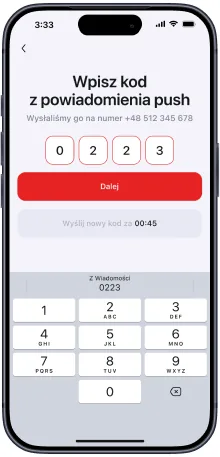
simple sign-up by phone number;
location detection and a selection of the nearest stores;
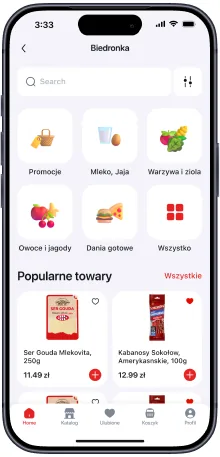
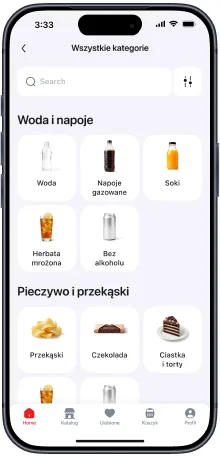
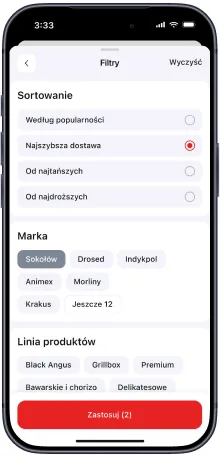
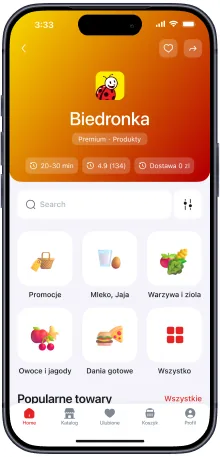
a catalogue with search and filtering;
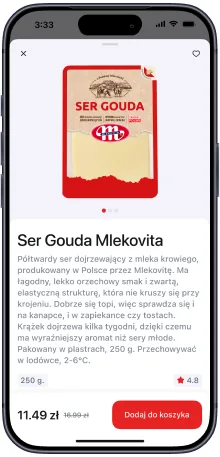
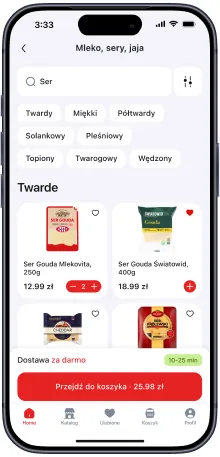
a convenient product card with the emphasis on the photo and the composition.
Design
User flow
CJM
Summary functional analysis
Prototyping
Functional product map in Excel, then the first screen sketches
Low-fidelity prototypes in Figma, then testing the scenarios.
Interactive prototype: sign-up, location, choosing stores, placing the order.
Prototyping
UI and visual concept
Collected moodboards, analysed the visual style of competitors, tested colour schemes. Formed a modern visual system with the emphasis on cleanliness, contrasting CTAs and readable typography.
Design tokenisation
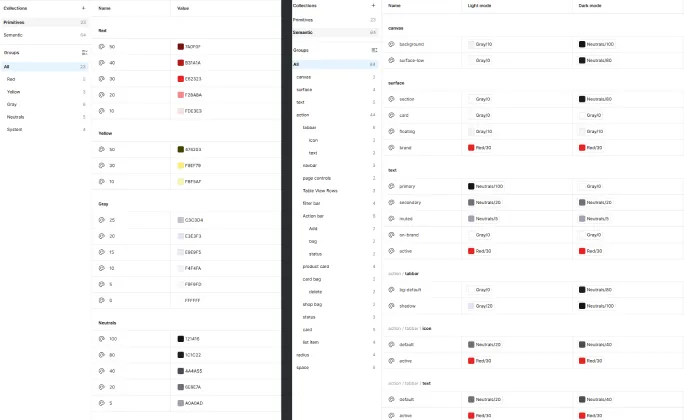
At the final stage I focused not on a full-scale design system but on creating a tokenised base of elements.
Formed a colour palette of primitives (background, text, accent elements).
Laid down design tokens for the states of buttons, inputs and cards.
Set up the base typographic styles for headings and text.
Defined the approach to interface scalability through tokens rather than rigid components.
Design system
Results
An app with a complete user scenario from entering it to placing an order.
A structured base of research and competitor analysis.
UI and a design system worked out for further scaling.